
8 Best Sumatra Tourist Destinations: Exploring Ancient Jungles, Volcanic Lakes, and Marine Paradises
As the sixth-largest island in the world, Sumatra holds extraordinary natural and cultural wealth that is diverse yet not as crowded as Java or Bali. Ranging from world-heritage tropical rainforests home to wild orangutans, the world's largest volcanic lake, to the Sumatran elephant sanctuary at the southern tip, Sumatra tourist destinations offer an authentic adventure experience for every traveler.
Through TravelloMatic, you can connect directly with verified local tour operators across various provinces in Sumatra to plan overland journeys, wildlife safaris, jungle trekking, and marine tourism safely and in an organized manner.
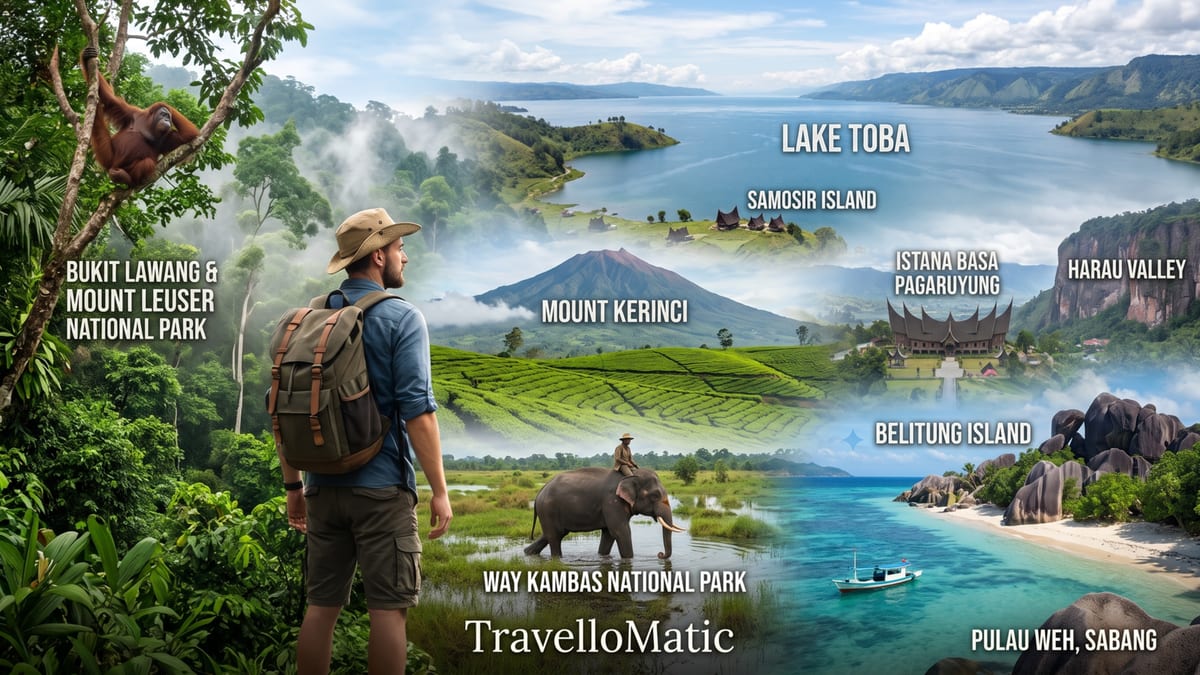
1. Lake Toba & Samosir Island, North Sumatra
Formed by a supervolcanic eruption around 74,000 years ago, Lake Toba is the largest volcanic lake in the world with Samosir Island right in the middle. Beyond the soothing green hill landscapes, this region is the cultural center of the Toba Batak tribe, rich in musical traditions, ulos weaving, and traditional Bolon house architecture.
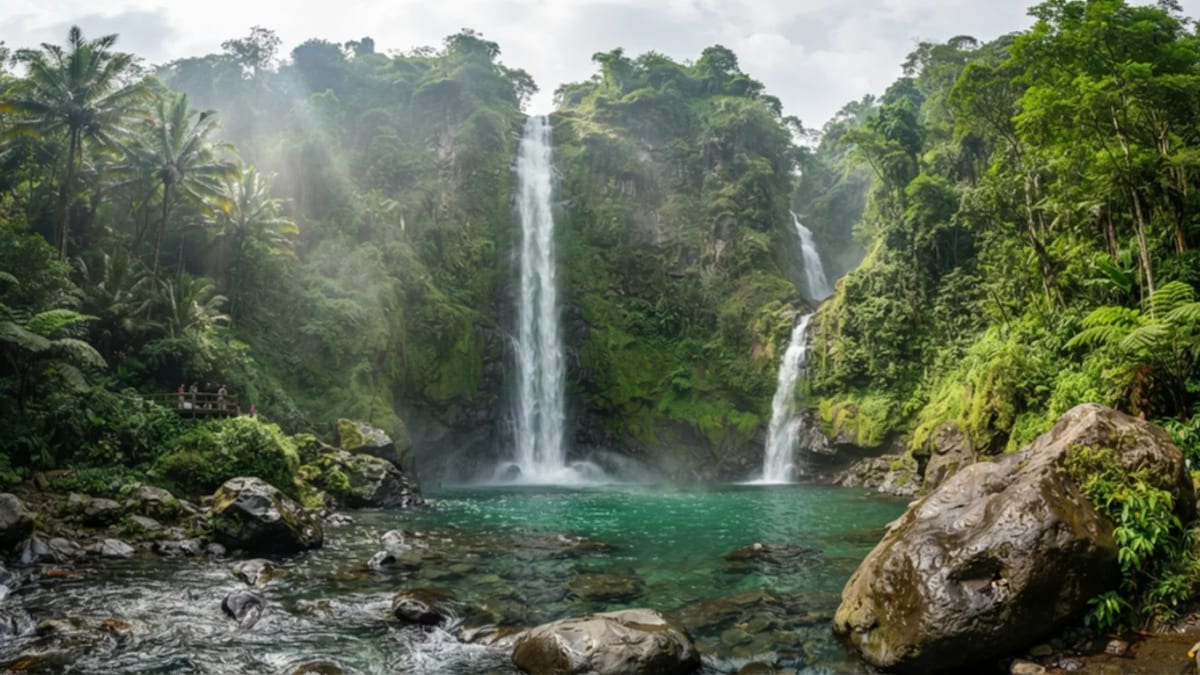
Main Attraction: Witnessing the Sigale-gale dance performance in Tomok Village, enjoying lake panoramas from Bukit Holbung and Tele View Tower, and exploring the Sipiso-piso waterfall.
Best Time to Visit: May to September when the weather is clear and visibility across the lake is very clear.
2. Bukit Lawang & Gunung Leuser National Park, North Sumatra
Located at the gateway to Gunung Leuser National Park—a UNESCO World Heritage site—Bukit Lawang is one of the few places in the world where travelers can see Sumatran orangutans directly in their natural habitat.
Main Attraction: Jungle trekking accompanied by licensed local guides to observe orangutans, siamangs, and hornbills, followed by river tubing back to the village.
Travel Note: To preserve wildlife and safety in the tropical rainforest, booking through official local guides registered on TravelloMatic is highly recommended.
3. Weh Island (Sabang), Aceh
Located at the westernmost tip of Indonesia, Weh Island is a hidden paradise for divers and peace-seekers. The waters around Sabang are the meeting point of the Indian Ocean and the Malacca Strait, resulting in healthy coral reefs and nutrient-rich currents.
Main Attraction: Diving and snorkeling at Iboih Beach and Rubiah Island, taking photos at the Indonesian Zero Kilometer Monument, and relaxing at the soft white sandy Sumur Tiga Beach.
Best Time to Visit: April to November when waters are calm and underwater visibility reaches 20–30 meters.
4. Bukittinggi & Harau Valley, West Sumatra
The Minangkabau highlands in West Sumatra combine the beauty of giant granite canyon cliffs, legendary culinary heritage, and a unique matrilineal culture. Bukittinggi serves as an ideal starting point to explore the nature of Ranah Minang.
Main Attraction: Exploring the steep cliffs and waterfalls in Harau Valley, crossing the iconic Kelok 9 hairpin turns, visiting the Pagaruyung Palace, and tasting authentic Minangkabau cuisine directly in its region of origin.
Best Time to Visit: Year-round, with peak dry weather between May and September.
5. Mentawai Islands, West Sumatra
Located off the western coast of Sumatra, the Mentawai Islands are world-renowned for two things: the best surfing waves on the planet and the indigenous Mentawai tribe who still maintain traditions of living in harmony with nature deep inside the forests of Siberut Island.
Main Attraction: Joining a cultural expedition with local guides to learn about Sikerei traditions (traditional Mentawai healers), and surfing legendary spots like Telescopes and Lance's Right.
Best Time to Visit: April to October for the best surf season and friendlier weather conditions for ocean crossings.
6. Mount Kerinci & Lake Gunung Tujuh, Jambi
For mountain climbing enthusiasts, Mount Kerinci (3,805 masl) is the highest volcano in Indonesia and the highest peak in Sumatra. In the same national park area lies Lake Gunung Tujuh, the highest caldera lake in Southeast Asia surrounded by seven mountain peaks.
Main Attraction: Climbing the peak of Kerinci via the Kersik Tuo route, camping by the foggy shores of Lake Gunung Tujuh, and exploring the Kayu Aro tea plantations at the foot of the mountain.
Best Time to Visit: March to October to minimize the risk of heavy rain on the climbing trails.
7. Belitung Island, Bangka Belitung Islands
Famous for its landscapes of giant granite rock formations scattered along white sandy beaches and turquoise blue sea water, Belitung Island offers a relaxed and family-friendly island-hopping tour.
Main Attraction: Island hopping to Lengkuas Island featuring a 19th-century colonial-era lighthouse, relaxing at Tanjung Tinggi Beach, and visiting the Andrea Hirata Word Museum.
Best Time to Visit: April to October when sea breezes are calm and skies are clear.
8. Way Kambas National Park, Lampung
Located at the southeastern tip of Sumatra Island, Way Kambas National Park is one of the oldest conservation areas in Indonesia as well as the last stronghold for endangered endemic species such as the Sumatran Elephant (Elephas maximus sumatranus), Sumatran Rhinoceros, and Sumatran Tiger.
Main Attraction: Joining night safari tours and wildlife observation in the savannas and swamps of Way Kanan, river boating with forest rangers/conservation guides, and conservation education at the Elephant Conservation Center (PKG).
Best Time to Visit: April to October during the dry season, because savanna safari trails are easier to traverse and wildlife gathers more frequently around river water sources.
Practical Holiday Guide to Sumatra
Access & Flights: Main air entry points include Kualanamu Medan (KNO), Minangkabau Padang (PDG), Sultan Iskandar Muda Aceh (BTJ), H.A.S. Hanandjoeddin Belitung (TJQ), and Radin Inten II Lampung (TKG).
Distance & Duration: Because Sumatra's geographical expanse is vast, focus on one regional corridor per trip (for example North Sumatra: Medan–Bukit Lawang–Lake Toba, or Lampung: Way Kambas–Krakatau) so you do not waste time on the road.
Special Gear: Prepare anti-slip trekking shoes, neutral-colored clothing (for wildlife safaris), and quick-dry clothing if you plan to enter the forest areas of Bukit Lawang, Kerinci, Way Kambas, or inland Siberut.
Guides & Permits: National park areas such as Gunung Leuser, Kerinci, and Way Kambas require accompaniment by official local guides/forest rangers and conservation area entry permit registration.